In brief
Germany's Bild says Russian negotiators showed European officials a plan for a "new European security order" around this week's Abu Dhabi talks: Finland out of NATO, no NATO bases in Estonia, Latvia or Lithuania, Moldova split into a three-part federation, and all of Donbas handed to Russia. The Kremlin denies the Finland item and Bild calls it one of several drafts, but Moscow's official line this week, from Lavrov's "sit in the hotel" to Medinsky's "new Yalta and Potsdam", points the same way. We break down what's confirmed and what isn't, the 2003 Kozak plan and the 2021 draft treaty this list echoes, what Russia offers in return, and Europe's answer from Dublin.
Finland, out of NATO. No NATO bases in Estonia, Latvia or Lithuania. Moldova, split into three. And all of Donbas, handed to Russia.
That’s the list a German newspaper says Russian negotiators put in front of European officials this week in Abu Dhabi. The Kremlin denies it. Bild itself says it’s only one of several drafts. But Russia’s chief negotiator has already told state TV what he’s after.
A new Yalta. A new Potsdam. The last time great powers sat down to draw Europe’s map, it lasted 45 years. And tomorrow, one small corner of that map goes to the polls.
The leak: what we actually know
Let’s be careful about what we actually know. The story comes from Bild, Germany’s biggest tabloid, citing its own sources. It says Russian representatives presented a plan for what they call a “new European security order”. And that Europeans saw it on the sidelines of the Abu Dhabi talks on November tenth and eleventh.
Bild adds three caveats of its own. This is one of several proposals. Several groups of go-betweens are competing with each other, some of them linked to the military. And it isn’t clear that Putin has signed off on this version.
The Kremlin’s answer was flat. Dmitry Peskov said a demand for Finland to leave NATO was “not put forward” and “certainly wasn’t discussed”. But one part of the list doesn’t rest on Bild alone. Ekho, an independent Russian outlet that Moscow lists as a foreign agent, separately reported the same Moldova clause, citing people inside the negotiating groups.
And the official Russian line this week points in exactly the same direction. On November tenth, Sergei Lavrov said Russia won’t accept another ceasefire “without understanding what comes next”. As for the Europeans who flew to Abu Dhabi? “Let them sit in the hotel.”
On the twelfth, Peskov said NATO’s promise not to expand must be put in writing. And Putin’s aide Yuri Ushakov said simply: “The current system does not work.” So whether this exact list is real or not, the direction is official. Moscow wants to talk about Europe before it talks about a ceasefire.
The North: Finland
Start with the biggest item on the list. Finland joined NATO in April twenty 23. With it came a land border with Russia of about 1,340 km. That more than doubled the alliance’s frontier with Russia overnight.
And it’s no longer just a line on a map. Since June, NATO has had forward land forces in Finland, based in Rovaniemi in Lapland and led by Sweden. Denmark, France, Norway, Italy, Iceland and the UK all contribute. Finland’s defence minister didn’t wait for a denial.
Antti Hakkanen called the idea “absolutely outrageous to even suggest”. He said these things are “in no way a matter for negotiation”. And he added: “Russia knows that.” Then he said something more interesting.
“Russia will test as far as the West’s softness allows.” The foreign minister, Elina Valtonen, said membership is a matter for Finland and the alliance. It’s “clear as day”. And she read the demand as a sign that Moscow is “in no hurry” to reach a deal.
Here’s the thing. Nobody in Helsinki thinks Finland is leaving NATO. That isn’t the point of putting it on a list. The point is to make the next demand sound reasonable by comparison.
The Baltics
The second item is quieter, and more practical. No NATO bases in Estonia, Latvia or Lithuania. Here’s what that would actually remove. In Estonia, a British-led force at Tapa, growing to about 1,200 troops.
In Latvia, a full multinational brigade led by Canada, with 14 nations and about 2,600 Canadians. Ottawa just extended the mission to twenty 31. And in Lithuania, Germany’s Panzer Brigade 45. It’s the first German brigade permanently based abroad since the Second World War.
It’s aiming for 4,800 soldiers, fully ready by the end of next year. Now look at the calendar. On December seventeenth, twenty 21, Russia’s foreign ministry published a draft treaty with NATO. Article four said no forces in any country beyond what was there on May twenty-seventh, nineteen 97.
In plain English: pull out of every country that joined after that date. Including the Baltics. NATO said no. Nine weeks later, Russia invaded Ukraine.
So the Baltic reaction this week was immediate. Lithuania’s foreign minister called any deal giving Russia a say over deployments “fundamentally unacceptable”. Latvia’s prime minister called the whole security architecture conversation “a trap”. For these three countries, this isn’t a negotiating position. It’s the exact thing their defence is built to prevent.
Moldova
The third item is the one most people outside the region missed. And it’s the one with the longest history. Under the reported plan, Moldova would become a federal republic of three parts. Moldova proper, Transnistria and Gagauzia.
And if Moldova ever joined the European Union, Transnistria and Gagauzia would get to vote on independence. If that sounds familiar in Chisinau, it should. In November 2,003, a Kremlin aide named Dmitry Kozak drafted almost the same thing. An asymmetric federation of the same three parts.
The upper house would have had 26 seats. 13 for Moldova, nine for Transnistria, four for Gagauzia. Enough for the breakaway region to block major laws. Moldova’s president at the time, Vladimir Voronin, was ready to sign.
Putin was booked to fly in for the ceremony. Then the final text came back with one addition. Russian troops would stay in Transnistria for another 20 years. Close to midnight, Voronin called Moscow and pulled out.
Putin cancelled the trip. 23 years later, the same idea is back. This time, the trigger for breaking the country apart would be joining the EU. Chisinau’s answer: “The more Moldova advances toward the European Union, the more scarecrows and provocations appear from Moscow.”
And there’s a legal wall too. Moldova’s constitution calls the state “unitary and indivisible”. Changing that takes a referendum backed by a majority of all registered voters. Not just those who turn up.
Which brings us to tomorrow. On November fifteenth, Gagauzia elects its governor and its regional assembly. About 129,000 people can vote. Eight candidates are running for governor, including a Moscow-aligned former MP.
If nobody wins outright, there’s a runoff on November twenty-ninth. A region of about 100,000 people. Named in a plan to redraw Europe. Voting the day after it leaked.
The sea lanes
The Ukraine part of the list holds few surprises. Russia keeps everything it occupies, plus the parts of Donetsk and Luhansk it hasn’t been able to take. Ukraine stays out of NATO forever, but may join the EU. Two lines stand out, though.
Odesa and Mykolaiv would be demilitarised, and barred from serving as naval bases. That would leave Ukraine with a coastline it isn’t allowed to defend from the sea. And Russia wants guaranteed freedom of navigation in the Black Sea and the Baltic. Think about why that clause is there now.
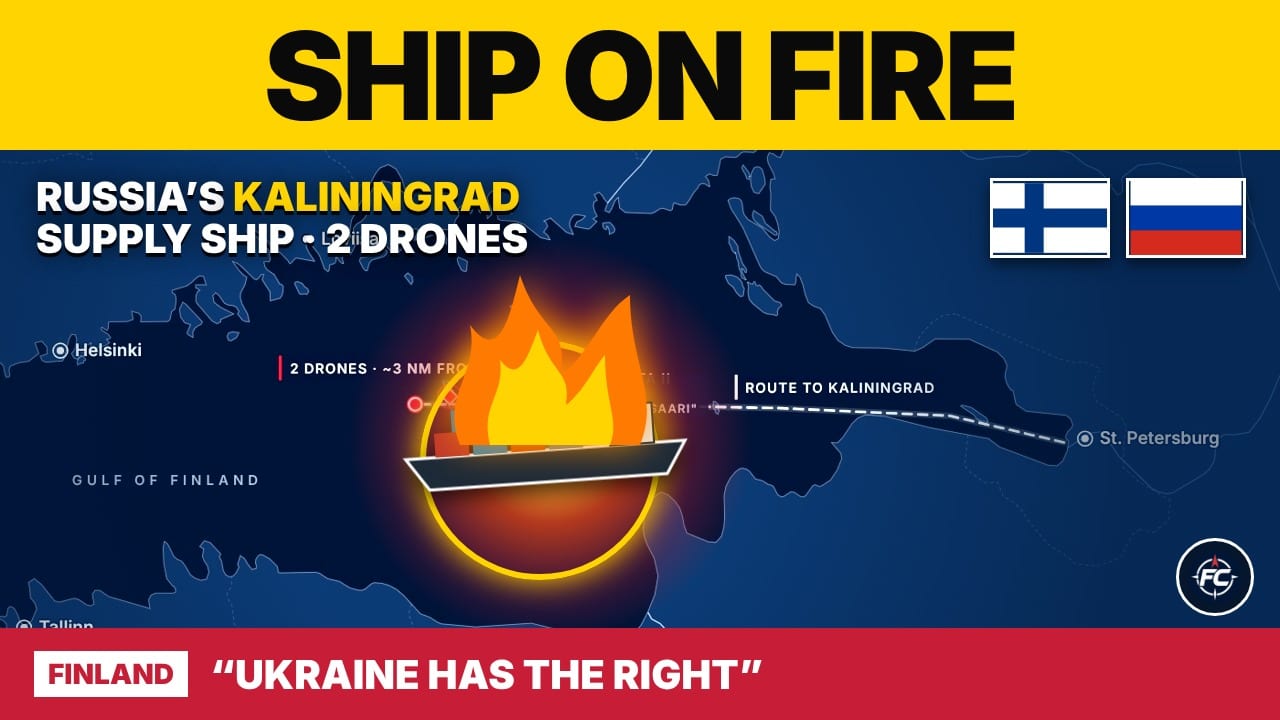
On November eleventh, Ukraine hit the oil port of Ust-Luga and, according to its security service, a Russian missile ship in the Gulf of Finland. Finland’s military confirmed a strike near Gogland island. It happened about 40 km from the Finnish coast. For Moscow, the Baltic is the route for its oil and its shadow fleet. A guarantee on paper could turn every future boarding of a Russian tanker into a treaty dispute.
The price tag
So what does Moscow put on the other side of the scale? Three things. Pull its nuclear weapons out of Belarus. Station no intermediate-range missiles there.
And withdraw its troops from Transnistria. It sounds generous. Look closer. Russia put an Oreshnik missile unit on combat duty in Belarus in December last year.
Analysts place it most likely at Krichev-six, an old Soviet airbase about five kilometres from the Russian border. It has its own rail spur. The permanent infrastructure stays in Russia. In other words, it can leave by train.
And it can come back by train. And notice what’s missing. The plan says nothing about Kaliningrad, Russia’s own enclave between Poland and Lithuania, and the missiles based there. Now Transnistria.
Russia’s force there is usually put at about 1,500 troops, guarding the Cobasna ammunition depot. But Moldova’s defence minister says only around 170 to 180 of them actually came from Russia. The rest are locals with Russian passports. And since twenty 22, Russia can barely reach them.
Ukraine sits in between, and Moldova won’t let Russian military flights through. So here’s the trade. Finland’s membership, the Baltic brigades and Moldova’s constitution are permanent, hard to undo, and decided by democracies. Missiles on a train and a garrison Moscow can’t resupply can be put back in a week.
That’s not a compromise. It’s a price list.
Why now
So why surface a list like this now? Because for the first time, Washington has agreed to discuss Europe’s security architecture inside the Ukraine talks. Moscow has been asking for that since twenty 21. After meeting Putin on Thursday, US envoy Jared Kushner flew to Dublin.
He said: “We cannot conclude this deal without the Europeans being at the table.” Putin, he said, was “willing to give it a try”. Putin had his own message for the envoys. He wants Washington to make its European allies decide “what they want: peace or war in Ukraine”.
And any Western troops in post-war Ukraine, he said, would mean the war goes on. A day later, the Kremlin added a condition. Europeans could join once Moscow understands their “genuine intention and readiness to contribute”. Look at the order of operations.
Lavrov rules out a ceasefire first. Peskov wants NATO’s limits in writing. Medinsky talks about Yalta. And then a list leaks that puts Finland, the Baltics and Moldova on the table.
The European Council on Foreign Relations put it bluntly. By agreeing to talk about the architecture at all, the Americans let Moscow frame the debate and set the agenda. That comes at the cost of the one thing Europe wants first. A ceasefire.
Europe’s answer
Europe’s answer came the same week, from Dublin. On Thursday, 40 European countries signed a declaration. Any matter affecting European security has to be decided with Europeans in the room. On Friday, EU leaders named their negotiating team.
The European Council and the Commission, plus five military heavyweights: Britain, France, Germany, Italy and Poland. Antonio Costa said Europe must speak “with one clear and united voice”. And he added: “Only Ukraine has the legitimacy to decide on matters concerning its territory.” Germany’s chancellor was blunter.
Friedrich Merz called the Kremlin’s conditions “the same old game”. As for a new security architecture? “We have that already.” And the EU’s top diplomat, Kaja Kallas, warned against Russia’s “traps”.
Ceasefire first. And Moscow doesn’t get to choose Europe’s mediators. Zelensky drew the same line. Talk about Europe’s architecture, he said, comes “after the ending of the war, after the security guarantees for Ukraine”.
So the positions are now on the record. Moscow wants the map first. Europe wants the guns silent first. And Washington is standing between them.
What to watch
First, Gagauzia. Tomorrow’s vote, and a possible runoff on November twenty-ninth. A Moscow-friendly result would give this plan a local face. Second, the next round in Abu Dhabi, expected as soon as next week.
Watch whether Europeans are actually in the room. Or, as Lavrov put it, sitting in the hotel. Third, paper. Does Moscow ever put this list on the table officially?
Or does it stay a leak it can deny? A leak lets you test reactions for free. And fourth, Berlin. Merz is expected to host the Coalition of the Willing later this month.
That’s the group that would put troops into post-war Ukraine. It’s exactly the thing Putin just called a reason to keep fighting. In twenty 21, Russia sent its list to NATO in writing. The answer was no, and nine weeks later the tanks rolled.
This time the list came through a newspaper. The answer, so far, is the same.
Key points
- The LeakBild (13 Nov, single source, unconfirmed) reports the list; Kremlin spokesman Peskov says the Finland demand "was not put forward". Independent Russian outlet Ekho separately reported the Moldova clause.
- The North and the BalticsFinland brought ~1,340 km of new NATO border with Russia and now hosts NATO forward land forces in Rovaniemi. "No bases" would remove the UK-led force at Tapa, the Canada-led brigade at Ādaži and Germany's Panzer Brigade 45 in Lithuania, the same demand as Article 4 of Russia's December 2021 draft treaty.
- MoldovaThe reported federation of Moldova, Transnistria and Gagauzia mirrors the 2003 Kozak Memorandum, which Chișinău rejected at midnight. Gagauzia votes on 15 November, the day after the leak.
- The Price TagMoscow offers to pull nuclear weapons and missiles out of Belarus and troops out of Transnistria. The Oreshnik unit at Krichev-6 sits ~5 km from the Russian border on a rail spur, and only ~170–180 of the ~1,500 troops in Transnistria came from Russia, per Moldova's defence minister.
- Europe's Answer40 countries signed the Dublin declaration, the EU named a negotiating team (Council, Commission, UK, France, Germany, Italy, Poland), and Costa, Merz and Kallas rejected the framing.
Sources
- Bild (via Interfax-Ukraine
- Anadolu
- bne IntelliNews)
- TASS
- Meduza
- Ekho (via NewsMaker)
- Euronews
- RTÉ
- Reuters
- Moscow Times
- Yle
- LRT
- Antena 3
- TV8 Moldova
- Moldpres
- Jamestown Foundation
- DW
- IWPR
- Janes
- CSIS
- ECFR
- AFP / France 24
- EEAS press remarks (Kaja Kallas)
- Russian MFA draft agreement with NATO (17 Dec 2021)
- Constitution of the Republic of Moldova.
The Bild list is unconfirmed and labelled as such on screen. All quotes are attributed to their source. Map routes and the Krichev-6 rail animation are illustrative. Music and sound effects: Mixkit (mixkit.co), Mixkit Free License Satellite imagery: NASA Earth Observatory, Blue Marble Next Generation Shaded relief and borders: Natural Earth (public domain) Front line: DeepStateMap Thumbnail portrait: kremlin.ru, CC BY 4.0 Footage: Russian pool, Kremlin pool, KP / Raptly, Viory / Times Now, EU pool via DRM News, AFP, eudebates.tv, BFBS Forces News, CTV News, NATO via StratPost and Firstpost, Euronews, Finnish Ministry of Defence, Teleradio Moldova, NTV (archive), MTI Aerials, Marcus Life Stories, Kanal13, Russian MoD via KP, EU Audiovisual Service.
Spotted an error? Request a correction.