In brief
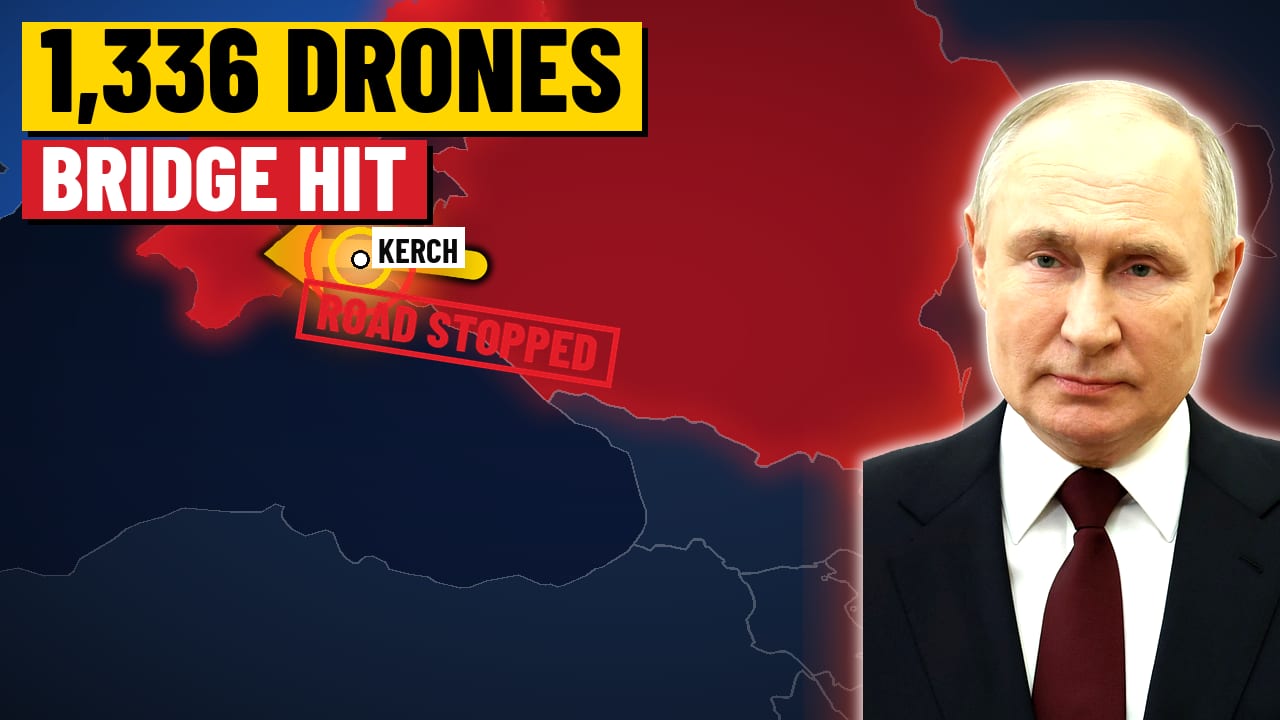
Overnight into 17 November 2026, two bridge systems took the hit on the same cycle. In Kyiv, Mayor Vitali Klitschko reported preliminary ballistic hits on the Northern (Pivnichnyi) and Southern (Pivdennyi) bridges over the Dnipro — both closed for inspection while water and heating failed in parts of the capital and morning traffic jammed. South, photos showed the Crimean / Kerch Bridge road arch over the shipping channel down in the strait after a second overnight Ukrainian strike; Russia's Transport Ministry suspended road and rail, Aksyonov told people to stay clear of the approaches, and Peskov said the span would be restored "even better." Zelensky called it the seventh phase of a weeks-long SBU–General Staff operation and named domestic systems including Flamingo — label those weapon claims. This is not a remake of the 16 November "minor" hit package; this is the collapse night and the capital mirror.
Almost midnight in Kyiv. Mayor Vitali Klitschko posts a short line. Preliminary hits on the Northern and Southern bridges — the spans that carry the capital across the Dnipro. Hours later, on the other side of the map, the pictures are different.
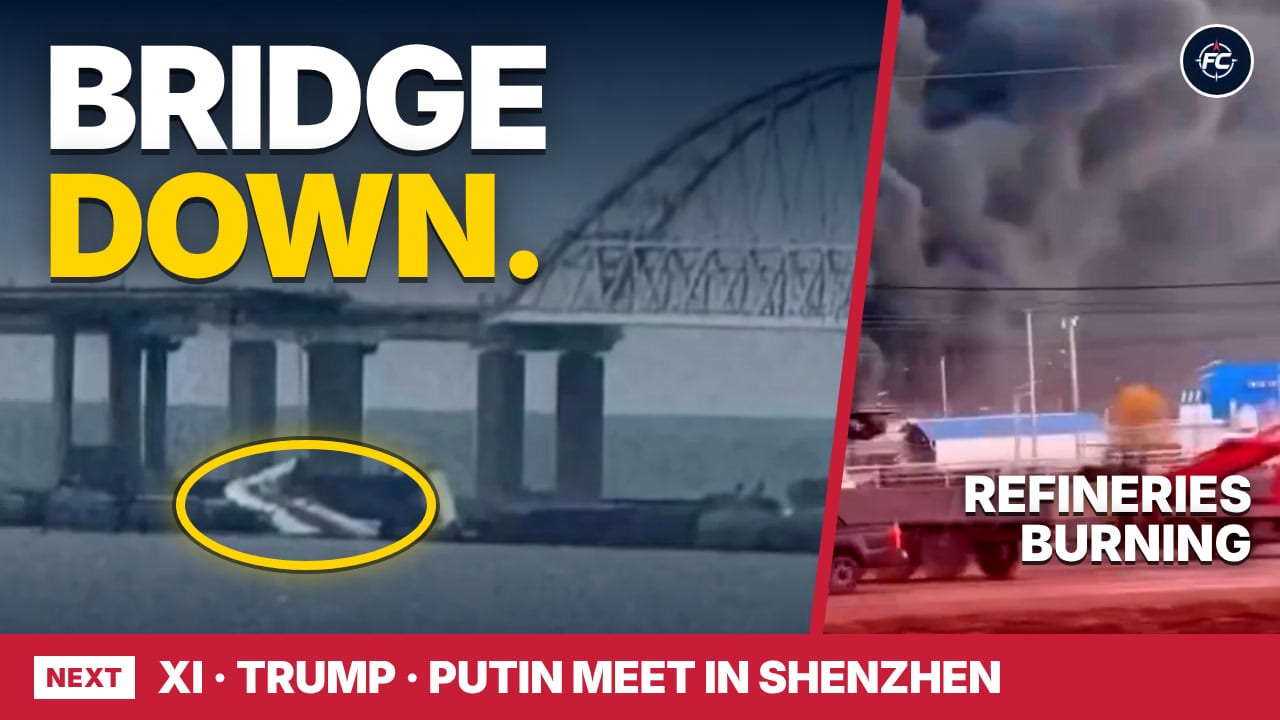
Not a crater in the asphalt. A road arch — the big steel span over the shipping channel — is in the Kerch Strait. Same night cycle. Moscow taxes Kyiv’s river crossings.
Kyiv drops Moscow’s Crimea crossing into the sea. This is not another “minor damage” story. This is the night the mirror closed.
Start on the civilian side
Start on the civilian side of the river. Kyiv’s Northern Bridge — Pivnichnyi — and Southern Bridge — Pivdennyi — are two of the main east–west spines over the Dnipro. A city of about 3 million people uses them every day. Klitschko said ballistic missiles hit them overnight into November seventeenth.
Both bridges closed while experts check the structures. Reopening waits on those assessments — not on a Telegram mood. He also reported damage to critical infrastructure. Water and heating cut in parts of the capital.
Morning rush turned into gridlock. Metro stations packed as people looked for another way across. Kyiv Independent reporters called the explosions among the loudest heard in recent months. Smoke over the city.
Further blasts into the early hours. Ballistic threat warnings kept going. This was not only Kyiv. Local officials reported hits or damage across other cities the same wave — Smila with three injured, Kharkiv, Zaporizhzhia, Dnipro, Cherkasy, Pavlohrad.
Ukraine’s emergency service reported two people killed in Kyiv’s Obolonskyi District on the seventeenth. As of morning reporting, it was not clear whether those deaths belonged to the overnight missile wave or a later drone alert. We do not pin them to the bridges without that clarity. And this was not the first time these two spans were on Russia’s list.
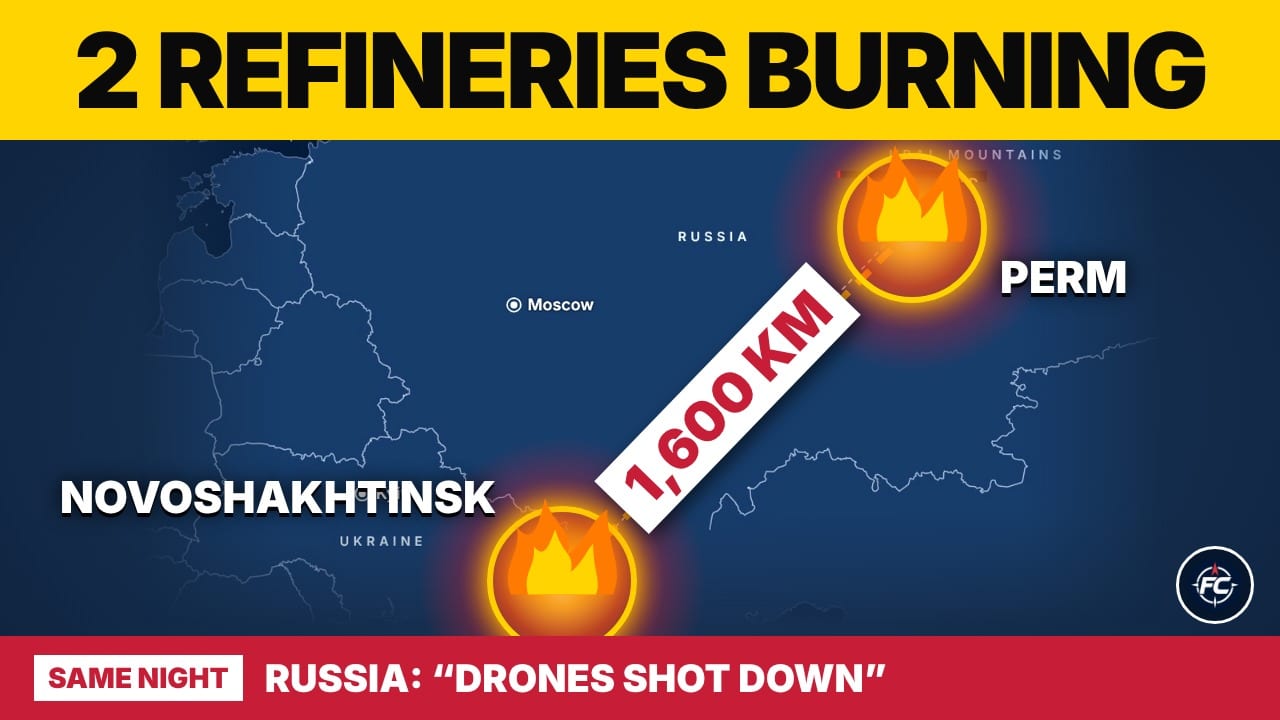
In early October, drone strikes had already chewed the road surfaces of the North and South bridges and snarled traffic. November seventeenth was the escalation: ballistic, closure, city-scale reroute. Russia’s Defence Ministry claimed a massive overnight strike on Ukrainian military industry, transport in Kyiv and Zaporizhzhia, energy, ports. That is Moscow’s framing.
What Kyiv’s mayor confirmed is simpler. Two bridges. Closed. A capital forced to cross the Dnipro the hard way.
Flip the map south
Now flip the map south. The Crimean Bridge — Kerch Bridge — is about 19 km of road and rail between Krasnodar Krai and occupied Crimea. Cars from 38. Passenger rail from 39.
Built after the 34 annexation. A political project as much as a logistics one — and still the main fixed link when the ferries fail. The night before, on November sixteenth, Ukrainian drones had already hit it. Aksyonov restricted traffic.
Russian media talked about an arch tilt of about 15 degrees. The Kremlin language was “minor.” Contraflow later. That was the first punch in under 24 hours.
We covered that ledger beat in the previous video. This one is the second punch. By the morning of the seventeenth, the photos do not look minor. The navigable road arch — Guardian cites about 227 metres — is down in the water.
Debris visible. Monitoring channels and OSINT say a long stretch of roadway went with it. The railway arch next to it is still standing in many frames — but Ukrainian officials and the Guardian say that side is damaged too. Treat the exact metre count carefully.
Treat the missing road span as real. Russia’s Transport Ministry: road and rail both suspended after the second overnight attack. Specialists assessing. Preliminary — no casualties on the bridge incident.
Sergei Aksyonov: the enemy struck again. Stay away from the approaches. Separately, he reported two killed in a drone attack in Crimea’s Leninsky district — that is not the same statement as MinTrans’s bridge prelim. Keep them apart.
Under that arch sits the deep shipping channel through the Kerch Strait — about 120 metres wide, a little over eight metres deep. Guardian analysis: wreckage there can block Azov–Black Sea shipping until someone clears steel from the fairway. Mariupol. Berdiansk.
The Azov coast. That is not just a road problem. Ukrainian aviation expert Andrii Kharuk told the Kyiv Independent the rebuild is not months — a year or longer. The collapsed structure, he said, is on the order of 6,000 tonnes.
Assembled onshore near Kerch, then floated into place. You do not jury-rig that over open water while drones still fly. Anatolii Khrapchynskyi: the road link is severed at the span. The ferry crossing was already out of service.
The railway will need load limits and long inspections after the shock through the supports. Kremlin spokesman Dmitry Peskov said Deputy Prime Minister Marat Khusnullin briefed Putin. A government commission on restoration. Peskov’s line: the bridge will be restored — and will be even better than before.
That is a political sentence. The engineering sentence is still sitting in the water.
Ukraine did not stay quiet
Ukraine did not stay quiet this time. President Volodymyr Zelensky said the strike was the seventh phase of an operation that had run for several weeks — planned and coordinated by the Security Service of Ukraine with the General Staff. Before the final hit, he said, Ukrainian forces systematically destroyed air defences, radars, electronic warfare gear, and other targets along the path to the bridge. At the critical stage, by his account: Palianytsia drones on the road section.
Neptune missiles, Ruta, and FP-5 systems on the railway. And the Flamingo — a precision strike with the communication link working to the final seconds. He also named a longer domestic list used across the wider operation — Dovbush, Vendetta, Da Vinci, Sichen, and others. We are not going to pretend we independently verified every name.
This is Zelensky’s inventory. Label it. Anton Herashchenko posted video he described as an FP-5 Flamingo seeker camera diving into the arch. Fire Point co-founder Denys Shtilierman amplified it — dedicated to colleagues Andrii and Yurii.
That video is powerful. It is still a claimed weapon identification until more forensics land. Show it. Tag it.
Ukraine’s SBU and General Staff later confirmed a multi-stage hit: one metal road arch and the span under it destroyed; railway preliminarily damaged. SBU said Alpha used Palianytsia on the road section at the endgame. Unmanned Systems Forces said they overloaded air defences and relayed signal for the final missile run. Again: Ukrainian official narrative.
Useful. Not a substitute for satellite battle-damage assessment. Zelensky framed the whole thing as an answer to Russian strikes on Ukrainian infrastructure — including bridges in Zaporizhzhia, Dnipro, Kyiv, and Odesa. Listen to that list again.
Including Kyiv. The same night Moscow was putting ballistic missiles onto Kyiv’s Dnipro spans, Kyiv was finishing a weeks-long ladder aimed at Putin’s bridge.
Two bridge systems, one night
Two bridge systems. One night. Different jobs. Closing Kyiv’s North and South bridges does not need a span in the river to hurt.
It taxes a capital. Heat. Water. Jams.
Metro crush. Civil circulation as a weapon. Russia has been probing those crossings since October. This was the hard close.
Dropping Kerch’s navigable road arch does something Moscow cannot spin as “inspections until noon.” It removes the boring reliability of the fixed link. Forces the land corridor through occupied south — the route Ukrainian drones already hunt. Threatens the Azov shipping channel until debris is cleared.
Turns a symbol of annexation into a repair problem measured in heavy lifts and air cover. Kerch already had a ledger: truck bomb twenty 22, Sea Baby twenty 23, underwater supports twenty 25, drones on the sixteenth, collapse on the seventeenth. The story changed category overnight — from harass-and-inspect to span-in-the-strait. Keep the politics short.
U.S. envoys Witkoff and Kushner had just been in the mix with European partners. A Trump–Xi–Putin photo in Shenzhen was on the calendar. Zelensky’s warning about big-power tables without Ukraine still hangs over the week. But the air war does not wait for the seating chart.
Russia wanted Kyiv’s bridges to feel unsafe. Ukraine wanted Crimea’s bridge to look finished. For one morning, both got a version of what they asked for.
Four things to watch
Four things tell you what this night becomes. Do the Northern and Southern bridges reopen in days, or does inspection become a week of east–west friction? Watch Klitschko and the city military administration — not victory edits. With the road arch down and the ferry already strained or out, every convoy to Crimea is a land-corridor problem.
Watch the Melitopol–Henichesk–Chonhar belt. That is where the next logistics tax gets collected. Can Russia lift steel out of the navigable channel under fire? If the fairway stays blocked, Azov shipping pays separately from the road.
Peskov says better than before. Engineers say year-plus and floating cranes. The gap between those sentences is the real rebuild clock — and every crane is a target. Russia hit the bridges Kyiv lives on.
Ukraine put Putin’s bridge in the water. Same night. Different rivers. One lesson either side can read without a press office. In this war, the crossings are the message.
Key points
- KyivKlitschko — N/S bridges hit overnight into 17 Nov, closed pending assessment; critical infrastructure damage; metro overcrowding. October drones already chewed the road surfaces; this was the ballistic escalation. DSNS reported two dead in Obolon — link to bridges unclear.
- KerchRoad navigable arch (~227 m cited by Guardian) in the water; rail arch damaged per UA/Guardian. MinTrans — road + rail suspended, prelim no bridge casualties. Expert (KI): rebuild measured in a year+, ~6,000-tonne floated arch, ferry already strained.
- Weapons (UA claims — labelled)Zelensky — 7th phase; Palianytsia on road; Neptune / Ruta / FP-5 on rail; Flamingo precision to final seconds. Seeker video amplified as Flamingo — powerful, still claimed ID until more forensics.
- Why Pair ThemClosing Kyiv's spines taxes a capital without needing a span in the river. Dropping Kerch's channel arch removes the fixed link, pushes the land corridor Ukraine already hunts, and can clog Azov shipping until steel is lifted under fire.
Sources
- Vitali Klitschko (Telegram)
- Ukrinform
- Kyiv Independent
- Guardian
- Kyiv Post
- Hromadske
- Russian Transport Ministry
- Sergei Aksyonov
- Dmitry Peskov
- Zelensky / SBU / General Staff statements
- AFP / Al Jazeera / Militarnyi / NV (weapons and photo packages).
Weapon lists and seeker-video IDs are labelled as Ukrainian claims. Damage assessments are attributed. Map and schematic animations are illustrative. Music and sound effects: Mixkit (mixkit.co), Mixkit Free License Satellite imagery: NASA Earth Observatory, Blue Marble Next Generation Shaded relief and borders: Natural Earth (public domain) Front line: DeepStateMap Thumbnail portrait: kremlin.ru, CC BY 4.0 Footage: news pools, X/IG archive stills and clips, Kerch archive packages, United24 / strike-ops B-roll.
Spotted an error? Request a correction.