In brief
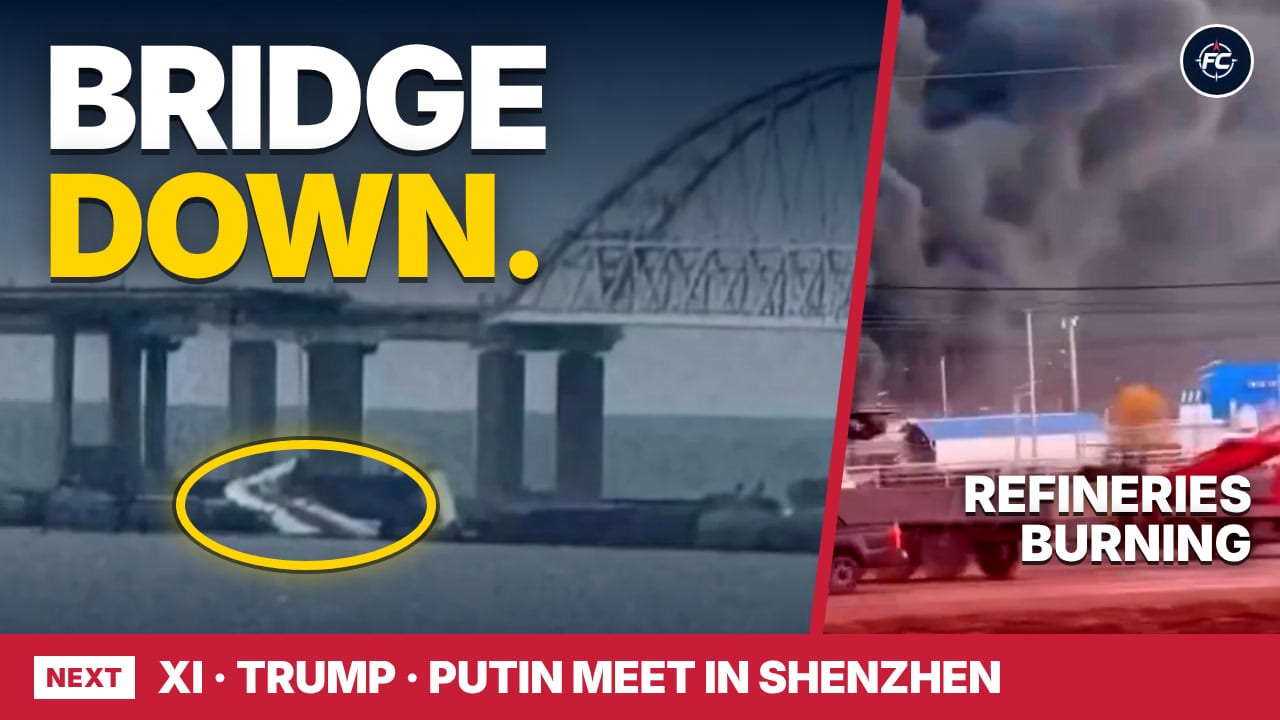
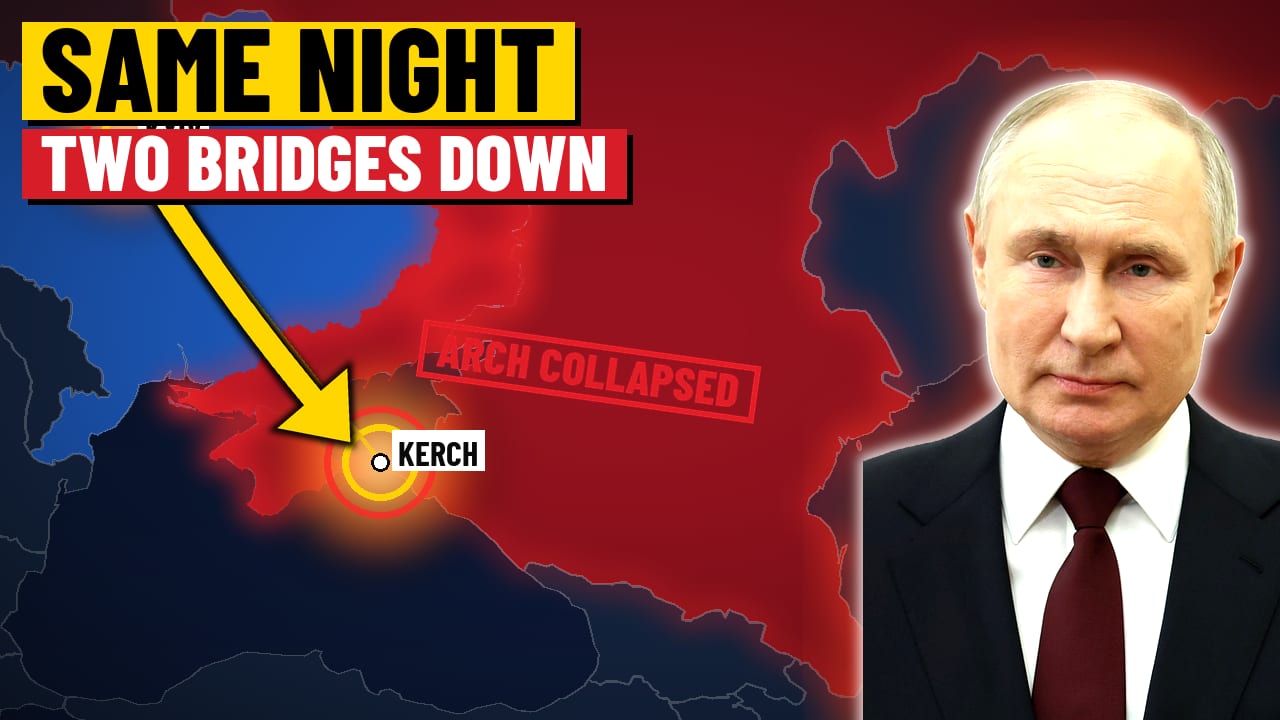
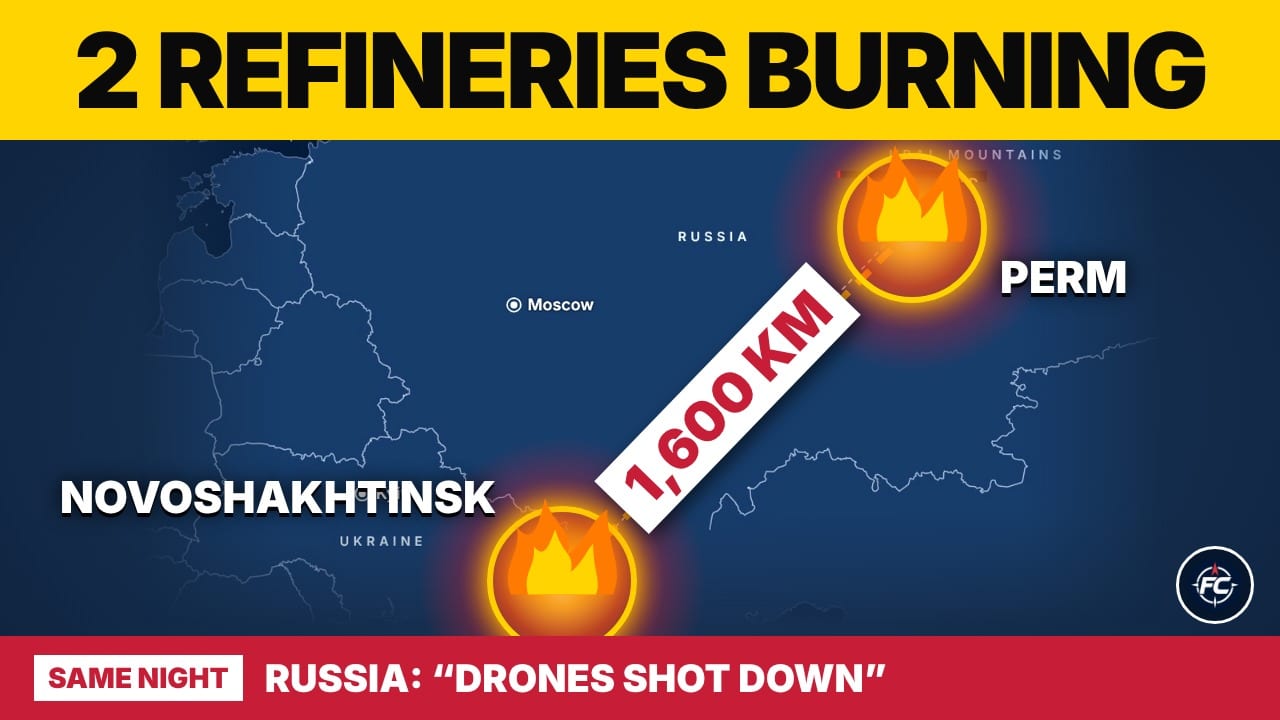
Overnight into 16 November, Russia's Defence Ministry said it intercepted 1,336 Ukrainian drones across 17 regions, Crimea and the Black and Azov seas — the second-highest daily MoD figure so far in 2026 by AFP's tally of Russian statements. Moscow's mayor said about 600 flew toward the capital region, with 191 neutralized on final approach. The same night, Russian-installed Crimea head Aksyonov said the Crimean (Kerch) Bridge was hit; road traffic halted around 02:22 Moscow time, MinTrans reported repairs and no injuries on preliminary data, while rail kept running. AFP assessed the bridge damage as appearing minor — the closure and logistics tax were real. This sat on a counterforce week: Ukraine's General Staff claimed strikes on Nizhnekamskneftekhim and TAIF-NK in Tatarstan, Monolit in Bryansk, and sites including Akhtubinsk, while Rostov saw fuel/power and bridge hits. Days before a Xi–Trump–Putin meeting in Shenzhen, the air war wrote its own communiqué.
Two 22 in the morning, Moscow time. That is when the official channel for the Crimean Bridge said road traffic was stopped. By sunrise, Russia’s Defence Ministry had a different number. 1,336 Ukrainian drones.
17 regions. Occupied Crimea. The Black Sea. The Azov Sea.
Around 600 of them, the mayor of Moscow said, were flying toward the capital region. And on the only road-and-rail bridge that stitches Russia to annexed Crimea, the local authorities said something else. The bridge was hit. So here is the question for this video. If Moscow’s own count is that high — and the bridge still had to close — what was this night actually for?
What we actually know
I’m going to separate the solid from the spin. The 1,336 figure comes from Russia’s Ministry of Defence. It is a claim. It is not a verified launch count.
Moscow reports drones it says it destroyed. Ukraine has not confirmed how many it sent. AFP, looking at Russia’s own daily statements this year, called it the second-highest daily number so far in twenty 26. Not the highest night of the entire war.
Second-highest this year by Moscow’s ledger. That is the careful way to say it. Moscow’s mayor, Sergei Sobyanin, filled in the capital slice. From five in the afternoon on the fifteenth to eight in the morning on the sixteenth, he said about 600 drones flew toward the Moscow region.
Most, he said, were killed on the distant approaches. 191 were neutralized on the final run into the city. Three nights earlier, on the thirteenth, he had reported 467 toward the region and 144 on approach. So this was not a one-off over the capital.
It was a second heavy night in the same week. Here is what is solid without believing every MoD digit. Regional governors reported interceptions and damage across the south. The Crimean Bridge was closed by the people who run it.
Russia’s Transport Ministry said road traffic was suspended, repairs were under way, and — on preliminary data — nobody was hurt. Rail, they said, kept running. Kyiv, as of the morning reporting, had not publicly claimed the bridge strike. That absence matters. We are not inventing a Ukrainian press release that does not exist.
The Crimean Bridge
The Crimean Bridge — the Kerch Bridge — is not a symbol only. It is the main fixed link between Russia and the peninsula Moscow annexed in 34. Road and rail. Built after the annexation.
Opened for cars in 38, passenger rail in 39. If you supply the southern front and the occupied south from Russian territory, this is the artery that does not need a ferry schedule. Sergei Aksyonov — the Russian-installed head of Crimea — put it in one line on Telegram. The enemy hit the Crimean Bridge.
Traffic would be restricted, he said, likely until the afternoon. An operations headquarters stood up in Kerch. Russia’s Transport Ministry echoed the closure. Repairs.
They were checking whether cars could restart in alternating directions. Preliminary: no injuries. Rail: normal. AFP, citing channels close to the Russian army, said the strike looked like minor damage.
Monitoring channels talked about jams — Mash floated around 2,000 cars stuck on the approaches. Treat the jam figure as unverified. Treat the closure as real. This bridge has a ledger.
October twenty 22: a truck bomb tore the roadway and lit a fuel train. Months of disruption. July twenty 23: Ukrainian Sea Baby naval drones. Another closure.
June twenty 25: an attack on underwater supports, per the public ledger Kyiv Post and others keep. And now November sixteenth, twenty 26: drones again, traffic stopped before dawn. You do not need a collapsed span for a logistics hit to matter. You need inspections.
Queues. Alternating lanes. A night where every truck to Crimea waits for an engineer to say the deck is safe. That is a tax on the southern supply system. Paid in hours, not in headlines about a bridge falling into the sea.
The night before — the campaign
This was not a single firework night. It sat on top of a campaign. In the early hours of November fifteenth — the night before the big MoD count — Ukraine’s General Staff said its forces hit three military-industrial sites. One: Nizhnekamskneftekhim in Tatarstan.
One of Europe’s largest petrochemical complexes. Synthetic rubber. Plastics. The General Staff says those materials feed vehicles, aircraft, and binders used in solid rocket fuel.
Local reporting described fires, evacuations from a damaged building, hot water cut. We label that as a Ukrainian claim plus local effects — not a full battle-damage assessment. Two: the TAIF-NK refinery next door. Specifically, Ukraine says, the only primary distillation unit.
A fire was recorded. Three: Monolit in Trubchevsk, Bryansk region. Aircraft and helicopter parts. Metalwork.
Close to the border. The same night, the General Staff claimed a strike on Akhtubinsk airfield in Astrakhan — a major flight-test centre — with a secondary at a glide-bomb depot. And a long-range drone preparation site in Oryol region. Further south, the logistics war is quieter and just as real.
Rostov’s governor reported a hit on a Taganrog electrical substation that feeds industry and rail. OSINT pointed at Taganrog-ten, a 200-and-twenty kilovolt hub. Separately, a bridge on the R-two-80 corridor toward the occupied Azov coast took damage. Ukrainian open-source tallies say at least six bridges in that Rostov–Novoazovsk belt have been struck since mid-October.
The Institute for the Study of War framed the pattern cleanly. Ukraine is hitting petrochemicals, military industry, and launch sites — a counterforce campaign — while Russia runs its own winter energy strikes the other way. So when Moscow posts 1,336 the next morning, do not read it as a random swarm. Read it as saturation on top of a week that already went after fuel chemistry, airframes, and the roads that move them.
What a mass launch is for
A mass launch is not about every drone finding a target. It is about forcing the defence to choose. Every radar that stays locked on a cheap fixed-wing drone is a radar not free for something else. Every missile spent on a decoy or a slow cruise is a missile that is not sitting on a railcar or a glide bomb the next night.
On the morning of the sixteenth, Rostov’s governor said drones hit Azov — an oil depot and a gas distribution site on fire, three men injured. Other districts reported damage. Krasnodar and Yaroslavl industrial sites showed up in regional and monitoring reports. We are not going to pretend we have forensic confirmation on every plume.
And still the bridge closed. That is the point in one image. Even if AFP is right and the structural damage was minor — the system still paid. Traffic stopped.
Trains to Crimea ran late. Four passenger services from Moscow, Adler and St Petersburg were reported delayed by 2 to 4.5 hours while the road deck was checked. Russia wants the world to see a successful intercept night. 1,336 destroyed.
What the logistics board sees is different. A closed span. A jammed approach. Another night the southern route is not boring — and boring is what a supply bridge is supposed to be.
While the table is set in Shenzhen
Keep the diplomacy short. It is the frame, not the film. Last week in Abu Dhabi, American, Russian and Ukrainian negotiators met for two days. They moved a prisoner exchange forward.
They did not move a ceasefire. Putin restated hard territorial demands and said foreign troops on Ukrainian soil would mean the war continues. Zelensky said U.S. envoys floated a new question: if Ukraine joined NATO, would it withdraw from Donbas? He said that was the first time that trade had been raised that way.
He also said he would not surrender territory on his own — and that a full package might go to a Ukrainian referendum. The White House line, to the BBC, was that many ideas are discussed and any deal needs both parties. On Monday, China confirmed that Xi Jinping will sit with Donald Trump and Vladimir Putin in Shenzhen on November nineteenth, on the sidelines of APEC. Beijing used the phrase “world peace.”
U.S. officials say Russia’s war in Ukraine is not expected to be the focus of that trilateral. Zelensky has already warned that a meeting like that can start to look like a new Yalta — big powers talking about the map while the country on the map is outside the room. We covered the leaked “new European security order” list in an earlier video. We are not re-litigating that list here.
Just hold the timing in your head. Days before that summit photo, Moscow is announcing a 1,300-drone night and closing the Crimea bridge before lunch. Whatever gets said in Shenzhen about peace, the air war is still writing its own communiqué.
What to watch
Four things tell you if this night was a spike or a new normal. Does the Kerch roadway reopen clean, or does alternating traffic and inspection become the week? Watch MinTrans and the bridge ops channel — not Telegram victory laps. If Kyiv later claims the strike through SBU or HUR, put that claim next to the Russian damage language and keep both labelled.
Track the next Russian MoD daily totals. AFP already put this night second for twenty 26. If the ledger keeps printing four-digit nights, the story is industrial capacity and decoy mass — not one lucky swarm. Rostov bridges, Taganrog power, Azov fuel sites.
Open-source tallies already show a bridge campaign since mid-October. One more hit on the Kerch link fits that pattern: squeeze Crimea logistics from the strait and from the land approaches at the same time. Shenzhen on the nineteenth. Listen for whether Ukraine is on the agenda at all.
If it is not, the gap between the photo and the air-raid sirens is the story. Russia wants you to remember the number it shot down. 1,336. The bridge wants you to remember something quieter.
At two 22 in the morning, the road to Crimea stopped. That is not a victory parade for either side. It is a reminder. In this war, the logistics map still gets rewritten at night — one closed span, one burning depot, one saturated sky at a time.
Key points
- The Number1,336 is a Russian MoD claim, not a verified Ukrainian launch count. AFP: second-highest MoD daily in 2026. Sobyanin: ~600 toward Moscow region, 191 on approach.
- The BridgeAksyonov confirmed a hit; ops channel halted road traffic ~02:22; MinTrans — repairs, alternating-traffic check, rail normal, prelim no injuries. Kyiv had not publicly claimed the strike in morning reporting. Prior hits: Oct 2022 truck bomb, Jul 2023 Sea Baby, Jun 2025 underwater supports.
- The Campaign Under ItNight of 14–15 — UA GS claims on Nizhnekamskneftekhim (~1,120 km), TAIF-NK primary unit, Monolit (Bryansk), Akhtubinsk airfield, Oryol drone site. Rostov: Taganrog power, R-280 / Azov approaches; open-source tallies of multiple bridges since mid-October. ISW: counterforce vs Russia's winter energy strikes.
- Why Mass LaunchSaturation forces air defence to choose. Even a "minor" Kerch hit stops the road, jams approaches, and delays Crimea trains.
- Diplomacy FrameAbu Dhabi moved prisoners, not a ceasefire. Zelensky says U.S. floated NATO↔Donbas; Shenzhen trilaterals 19 Nov — U.S. officials say Ukraine war not the focus.
Sources
- Russian MoD
- Sergei Sobyanin
- Sergei Aksyonov
- Russian Transport Ministry (TASS)
- AFP / France24
- AP
- Kyiv Post
- Kyiv Independent
- ISW (15 Nov assessment)
- Ukrainian General Staff
- Vedomosti
- Mezha
- Radio Svoboda (Tatar)
- Reuters / BBC / Guardian (Abu Dhabi context).
The MoD count is labelled as a claim. Bridge damage assessments are attributed. Map routes and swarm animations are illustrative. Music and sound effects: Mixkit (mixkit.co), Mixkit Free License Satellite imagery: NASA Earth Observatory, Blue Marble Next Generation Shaded relief and borders: Natural Earth (public domain) Front line: DeepStateMap Thumbnail portrait: kremlin.ru, CC BY 4.0 Footage: news pools, archive Kerch Bridge packages, SBU/archive Sea Baby, United24 / strike-ops B-roll, Kremlin pool.
Spotted an error? Request a correction.